Concerning the Lakhimpur Kheri incident

What happens in Lakhimpur, stays in Lakhimpur?

Violence broke out on October 6, in Uttar Pradesh’s Lakhimpur when a car belonging to (MoS) for Home Ajay Mishra ran over four farmers who were protesting against the Centre’s three farm laws ahead of an event in Tikunia and subsequently killed them.
This led to clashes between the protesters and BJP workers, which led to the death of four more people believed to be from the BJP’s convoy.


This incident got intensified when the main culprit Ashish Misra(son of Ajay Misra) did not immediately get arrested and instead fled away.This discrepancy on the part of UP police agitated unrest among the members of Samyukt Kisan Morcha and other unions and received protests from the opposition parties and politicians from all over the country and immediate resignation was demanded of the home minister of state as his presence could affect the investigation.
Finally on October 9,Ashish Misra got arrested after 3 days of the violence.
The question which needs to be addressed is that ” Are rules and laws different for common people and for those belonging to the so-called VIP society? Is our law and order so weak and flexible that it can surrender and bend to the whims and fancies and desperation of those in power?”


We,at SehMat Foundation believe that justice is the law of the land and is same for all ,no matter what power the miscreants hold and hence it is equal for all the citizens of the nation as no dirty deed can be put under the carpet anymore and the ‘almighties’ will be put in the right place as What happens in Lakhimpur,does NOT stay in Lakhimpur.

bhumisrivastava001@gmail.com

Concerning the New Rajasthan Marriage Amendment

The modification to the Rajasthan Compulsory Registration of Marriages Act has sparked controversy, although it obviously does not validate or legitimise child marriage. The problem raised by the opposition and the India’s National Commission for the Protection of Child Rights, on the other hand, may prompt a rethinking of the legal structure governing child weddings, which continue to occur despite a formal prohibition.

All weddings in Rajasthan are required to be registered under a law passed in 2009. It is generally identical to state legislation and is based on the Indian Supreme Court’s ruling in Seema versus Ashwani Kumar (2007), which ordered that all marriages in India be registered. The original legislation did not prohibit the registration of child weddings, and the modification only changes the age at which the responsibility for registration shifts from the parents or guardians to the parties to the marriage.

Previously, it was the responsibility of the parties to the marriage to submit a memorandum on their marriage to the registrar if they were both over 21 years old, and the parents or guardians if they were younger. The amendment raises the age restriction for males to 21 and for women to 18 years old. It allows a woman to participate in marriage registration beyond the age of 18, which is difficult to interpret as allowing child marriage.

Child marriages are not invalid under the law, but they are voidable at the request of one of the parties, who may petition the court to dissolve the marriage within two years after reaching the age of majority. Registration of such a marriage may assist in establishing the legal rights of the minor party and any children born, as well as prevent any subsequent attempt to annul the marriage.

It may also aid in the prosecution of individuals who solemnise child weddings and the implementation of rules pertaining to the girl’s support and residency if the marriage is subsequently declared illegal. After recording the marriage, nothing prohibits the marriage registrar from notifying the child marriage prohibition officer. It’s worth noting that there was never a law prohibiting the registration of child marriages.

Even though registration could not prove a valid marriage in and of itself, the Supreme Court of India stated that it would have “great evidentiary value in matters of custody of children, right of children born from the wedlock of the two persons whose marriage is registered, and the age of the parties to the marriage.” As a result of this debate, the SehMat Foundation urges the Indian Parliament should examine the Law Commission’s suggestion to alter the Prohibition of Child Marriage Act, 2006, to render child marriages under the age of 16 null and voidable, as well as those solemnised between the ages of 16 and 18.


kumar.tanishk15@gmail.com

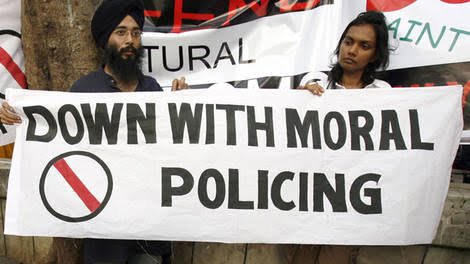
Concerning moral policing in Assam

In a bizarre incident in Assam, a 19 year-old girl was made to wrap a curtain around her legs as she came wearing shorts to an exam. Despite having no dress code mentioned ,the girl was derided by the invigilator and was accused of provoking outrage.
The incident occurred on September 15 when the girl had gone from her hometown Biswanath Chariali to Tezpur to appear for the entrance examination of the Assam Agricultural University (AAU). She had unhindered access to the venue but an invigilator inside the examination hall objected to her wearing shorts. The girl insisted on giving the examinations and even informed the authorities that she gave her NEET exams few days back in the same dress code but to no effect, the invigilator did not allow her to enter the exam room in shorts and asked her to wear something ‘decent’ and then she will be allowed to enter. The girl rushed to her father waiting outside the premises and informed him but before he could return with trousers the authorities had provided the girl a curtain to wrap around her legs which she did and wrote her paper. This incident has riled up contradictory emotions from people all over the internet. Some are supporting the girl and are giving the argument that such moral policing is detrimental to women and their freedom while some are opposing the girl and stating that the choice of her clothes was inappropriate for an examination hall.

Nevertheless, we at SehMat Foundation support the motion that clothes do not ensure decency and such regressive ideologies should be completely abandoned and such gender bias behavior and sexualization of young girls is completely unacceptable.

bhumisrivastava001@gmail.com

Concerning the Women’s Rights in Afghanistan- Realism v/s Reality

Women have been the major sufferers under any subjugation. The scenario is the same even today. Since the establishment of the Taliban government in Afghanistan, a question about the “fragility of women’s rights under the Taliban government” has become persistent in concerned minds. “As the fighting increases day by day, it’s a concern that we’ll go back in time”, said a 15-year-old girl from Afghanistan.


Though, the Taliban fictitiously acts to be inclusive of women’s rights, their freedom, and education; they haven’t changed much. When they wanted to seem presentable to the international community during negotiations in Doha, their rhetoric about women’s rights shifted. They purportedly promised to let girls study and women work- but usually with an inconspicuous restriction along the lines of “as permitted by Islam”.


The negotiation talks between Taliban representatives and the US Peace Envoy took place in Doha in 2019, with Afghan opposition leaders excluding Afghanistan’s President Ashraf Ghani. According to Mary Akrami Sahak, Director of the Afghan Women’s Network (AWN), “it’s the absence of the Afghan civil society and women, in particular, that undermine the outcome of the talks. For me, these are not peace talks as such, but preparatory talks at the most. None of the negotiations so far included women. None of the high-level participants had thoroughly concurred with the people they represent, the Afghan people, before going to the talks.” Distressingly, not only the Taliban but important segments of Afghan society appear to be growing more conservative, embracing doctrinaire versions of sharia that call for reducing women’s rights and freedoms.


Mary Akrami, in her interview, stated about how she had to flee with her family members from Afghanistan after the advent of the Taliban in Kabul. The Taliban broke into her office and home. They were searching for people who might be working with the government. While news outlets mostly focus on deadly attacks, rising insecurity, and increasing Taliban control, Mary Akrami wishes to highlight the positive transformation her country went through after the Taliban regime was foiled in 2001. What she fears is the erosion of the gains of post-2001 transformations if the man-only negotiations with the Taliban continue.


The situation is nothing less than a revolution for Afghan women. They find themselves in the untenable position of looking for help from the “international community.” There is a lot at stake. The international community’s tool kit is limited, and their political will is questionable. Even when Taliban leaders offered somewhat gentler rhetoric on women’s rights, there was still a major disconnect between what they said in TV interviews and what they did on the ground. Their commanders can be seen enforcing harsh rules at odds with the assurances by their leaders. The whole world witnessed what they did during their reign from 1996 to 2001 when they banned almost all education for women and girls, thus closing schools for girls entirely. They denied them access to almost all employment and confined them to their house unless escorted by a male family member.


In Taliban-controlled areas, bitter memories have again become realities. The Taliban leaders continue to make misted promises amid the forced closing of school doors for girls. They finally have pulled off their masks revealing their true source and agenda. Afghanistan’s Taliban rulers have set up a ministry for the “propagation of virtue and the prevention of vice” in the building that once housed the Women’s Affairs Ministry, escorting out World Bank staffers on 18 September as part of the forced move. The staff of the World Bank’s $100m Women’s Economic Empowerment and Rural Development Project, which was carried out in the Women’s Affairs Ministry, were escorted off the grounds on Saturday, said project member Sharif Akhtar, who was among those being removed. Meanwhile, the Taliban-run Ministry of Education asked boys from grades 7 to 12 back to school on Saturday along with their male teachers, but there was no mention of girls in those grades returning to school. This is how realism and reality are placed as an oxymoron in the terror politics of Afghanistan.


The continuous protest in Kabul and Herat has brought Afghan women out of their houses demanding their rights. The Taliban has said that women can be involved in government, but not hold ministerial positions. Thus, women have come to the streets to ask for rights, justice and equal participation as the Taliban has asked women to stop coming to office. They have education and want to play a role at all decision-making levels. Several methods have been deployed by the Taliban to abort these protests, often dispersing the groups with the use of tear gas and pepper spray. But, their audacity and persistence remain unchallenged.


The Foundation urges the countries to at least support the women in their unending struggle and find tools to dismantle the Taliban government from Afghanistan. The SehMat Foundation believes that the rights they are demanding are neither their privileges nor do they need to be ordained by the Taliban. These rights are theirs. These are fundamental to them, not an ordinance to be given by an authority.

g.shubhra2001@gmail.com

Cornering the Public Education System

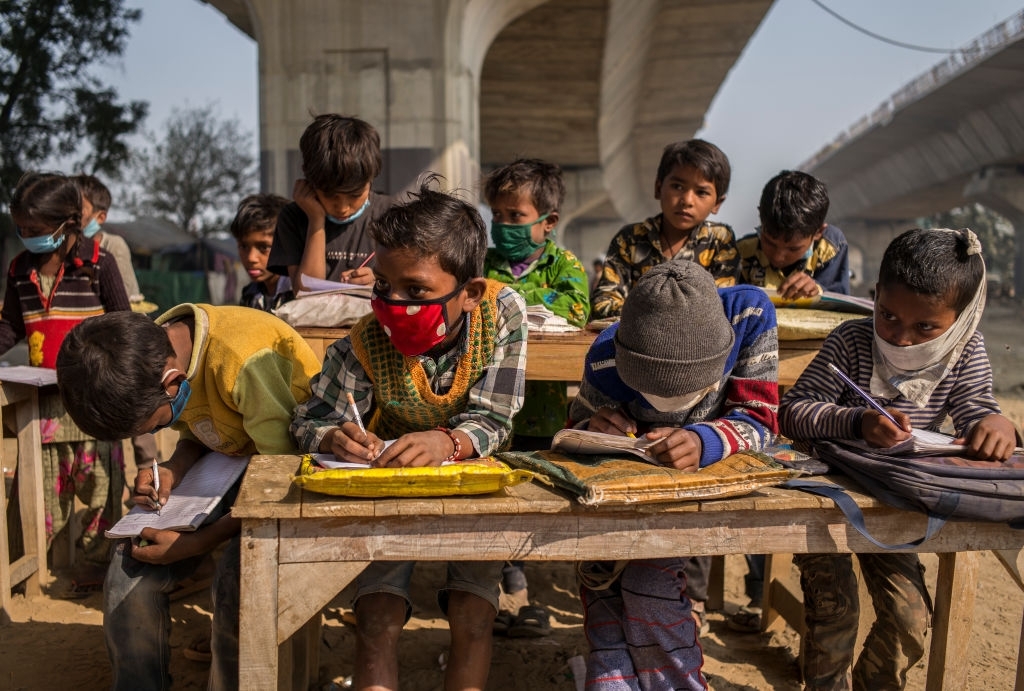
For millions of children in India, the public education system is the only option. As the pandemic has taken its toll on the economy, fee-charging schools have become unaffordable for many, pushing many to enrol in government institutions. In Delhi, there are around seventy-eight distinct types of government schools with varying levels of resources. The typical government school is the poorest, and the students who attend it are the poorest. There’s no reason they can’t have working bathrooms, clean drinking water, and secure compound walls.

The Right of Children to Free and Compulsory Education Act of 2009 has made a significant contribution to filling India’s classrooms and making education accessible to children who would otherwise be in danger of dropping out or being forced out. The fact that there is still more to be done should not detract from the significant work that has already been done. The SehMat Foundation believes that India should take a long, hard look at what it has accomplished and what remains.

Parents from lower-middle-class households are now requesting seats in the English-medium sections, according to school officials. Families whose breadwinners have lost their employment as a result of the pandemic are more likely to enrol their children in nearby government schools. Parents, particularly those in the lower middle class, are increasingly realizing that the quality of education in government institutions is considerably superior. The fact that net enrolment is decreasing from primary to secondary should be a cause for worry.

A government school teacher’s job might be lonely and stressful, but it is also extremely creative. The SehMat Foundation believes that India needs to do a lot more to empower school leaders, school heads, school communities, the whole teaching community, and the non-teaching community. The role of local governments should also be expanded to improve school quality.

The Right of Children to Free and Compulsory Education Act of 2009 also gave India the attitude of looking at the kid as a person who is growing and contributing rich and important experiences to the class, rather than a bucket to be filled. India needs to create a micro plan for each school, a district-wide plan for schools, and ultimately a state-wide plan. Before it can discuss levels of learning and instruction, it must first address drinking water, rainwater collection, school gardens, and dining facilities. Schools here should strive to demonstrate a commitment to high-quality education rather than separating students into silos.

kumar.tanishk15@gmail.com

Concerning the Interim Bill passed to allow Female Candidates in NDA

On the bright side of the hard-fought gender equality that’s being increasingly felt within the defense forces, the portals of the academies for pre-commissioned training are set to open for females. A Supreme Court bench of Justices Sanjay Kishan Kaul and Hrishikesh Roy has passed an interim order to permit women to wish the admission exam to National Defence Academy (NDA) scheduled on November 14th this year.

Till the day, the feminine candidates were allowed entry in armed forces only after Graduation in both technical and non-technical services.
A writ petition was filed by Mr. Kush Kalra seeking permission for girls to require a seat for the NDA entrance exam. The petition raised the matter of violation of Articles 14, 15, 16 and 19 of the Constitution of India by denying the prospect to eligible women candidates to hitch NDA- solely on the ground of their sex.


The petition has also stated that the specific exclusion of girls to become Permanent Commissioned Officers on the assumed idea of physical limitations of a particular sex may be a denial of the elemental Right to Practice any Profession and it is not justifiable within the contours of the Indian Constitution.


As the SC noted, it is indeed regretful that the military has been more reluctant than the Air Force and the Navy to completely accommodate women officers in its ranks. The bench has correctly criticized and found the military’s “policy-decision” unacceptable and regressive. It is susceptible to dithering till ordered to act by the courts.


According to The Press Information Bureau, the current percentage of the women in the armed forces (0.56% in the Army, 1.04% in the Air Force and 6.05% in the Navy) is likely to rise due to the upcoming admissions.


It would be ideal for the forces to simply accept that lady officers are considerably here to remain and soar to heights till the point where gender neutrality is non-negotiable. It is time for the forces to adapt themselves towards a compatible co-educational ethos and infrastructure for their institutes of coaching, and tweak the system, keeping a note of the intricacies peculiar to their work culture.
It is sanguine that the Supreme court has passed the bill and SehMat Foundation wishes for all the aspiring candidates ,regardless of sex, promising results.

tanudsv03@gmail.com

Concerning the Anti-Trafficking Law

An estimated 9,000 youngsters were recovered in India between April 2020 and June 2021 after being exploited for labor. Four youngsters, aged 12 to 16, died in November 2020 after being transported for work from Bihar to Rajasthan; several of them had been beaten. An estimated 9,000 youngsters were recovered in India between April 2020 and June 2021 after being exploited for labor.

Over the course of ten months, the Childline India hotline received 44 lakh distress calls. Over the course of a year, 2,000 children have arrived at its shelter houses, with 800 of them being rescued from dangerous working circumstances. Between April and August 2020, almost 10,000 incidents of child weddings were monitored. Increased Internet access has resulted in an upsurge in cyber-trafficking in recent years.

In March 2021, the Indian government confessed in Parliament that it does not have any national-level statistics on incidents of cyber trafficking. The effectiveness of various initiatives introduced by the Ministry of Home Affairs to increase cyber crime investigation and prosecution has yet to be determined. In its report on global human trafficking, the US Department of State still lists India as a Tier-2 nation.

The Trafficking in Persons (Prevention, Care, and Rehabilitation) Bill, 2021, has been proposed by the Indian government. This bill intends to address all elements of human trafficking, including the social and economic roots of the crime, traffickers’ punishment, and survivors’ protection and rehabilitation. Human trafficking is a crime in and of itself, but it also serves as a catalyst for a number of other crimes. It promotes child labour, child marriage, prostitution, bonded labour, forced beggary, drug-related crimes, corruption, terrorism, and other illegal industries by creating a parallel black economy.

In India, there is no shortage of anti-trafficking legislation, but enforcement is inadequate. He believes that bringing in the National Investigation Agency and raising the penalties for crimes deserve further discussion. AHTUs/committees at the national, state, and district levels are also included in the draught Bill. However, their proper operation can not be taken for granted. More severe regulations, notably the death sentence, have not been proven to have a larger deterrent impact. The Draught Bill, on the other hand, appears to be lacking in subtlety.

India is celebrating its 75th anniversary of independence. There is no greater gift to India than children’s freedom. The SehMat Foundation is urging Parliament to enact the strong anti-trafficking bill as soon as possible. No country can claim to be civilized if it allows its children to be bought and sold.

kumar.tanishk15@gmail.com