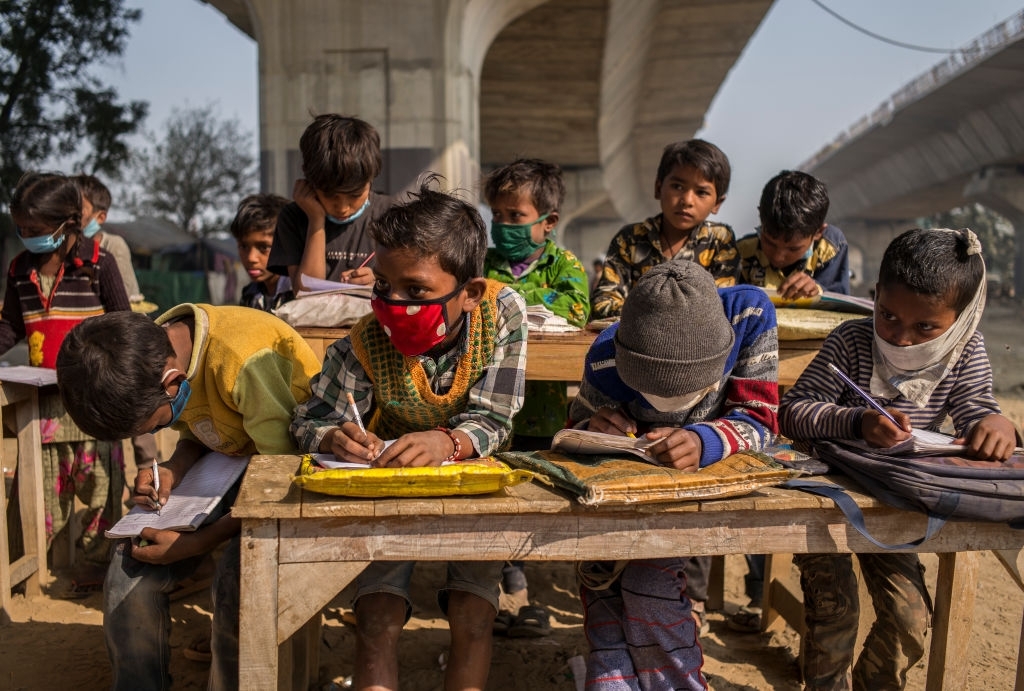
For millions of children in India, the public education system is the only option. As the pandemic has taken its toll on the economy, fee-charging schools have become unaffordable for many, pushing many to enrol in government institutions. In Delhi, there are around seventy-eight distinct types of government schools with varying levels of resources. The typical government school is the poorest, and the students who attend it are the poorest. There’s no reason they can’t have working bathrooms, clean drinking water, and secure compound walls.
The Right of Children to Free and Compulsory Education Act of 2009 has made a significant contribution to filling India’s classrooms and making education accessible to children who would otherwise be in danger of dropping out or being forced out. The fact that there is still more to be done should not detract from the significant work that has already been done. The SehMat Foundation believes that India should take a long, hard look at what it has accomplished and what remains.
Parents from lower-middle-class households are now requesting seats in the English-medium sections, according to school officials. Families whose breadwinners have lost their employment as a result of the pandemic are more likely to enrol their children in nearby government schools. Parents, particularly those in the lower middle class, are increasingly realizing that the quality of education in government institutions is considerably superior. The fact that net enrolment is decreasing from primary to secondary should be a cause for worry.
A government school teacher’s job might be lonely and stressful, but it is also extremely creative. The SehMat Foundation believes that India needs to do a lot more to empower school leaders, school heads, school communities, the whole teaching community, and the non-teaching community. The role of local governments should also be expanded to improve school quality.
The Right of Children to Free and Compulsory Education Act of 2009 also gave India the attitude of looking at the kid as a person who is growing and contributing rich and important experiences to the class, rather than a bucket to be filled. India needs to create a micro plan for each school, a district-wide plan for schools, and ultimately a state-wide plan. Before it can discuss levels of learning and instruction, it must first address drinking water, rainwater collection, school gardens, and dining facilities. Schools here should strive to demonstrate a commitment to high-quality education rather than separating students into silos.
kumar.tanishk15@gmail.com


